Welcome to Fujian JunGie New Material Technology Co., Ltd.!


JUNGIE
31
2019
-
05
Case Study of a Regenerative Thermal Oxidation System for Treating High-Concentration Organic Waste Gas
This paper analyzes a case study of the application of a regenerative thermal oxidation system at a printed circuit board laminate manufacturing plant. Practical experience demonstrates that such a system is highly effective in treating high-concentration organic waste gases, achieving a TVOC removal efficiency of over 99% while also recovering thermal energy. The system not only effectively purifies organic waste gases but also meets the requirements of clean production.
This article analyzes. Regenerative Thermal Oxidizer An application case at a printed circuit board laminate material manufacturing plant demonstrates that the regenerative thermal oxidation system is effective for high-concentration Organic waste gas The treatment performance is remarkable, with a TVOC removal rate exceeding 99% and the ability to recover thermal energy. This system not only effectively purifies organic waste gases but also meets the requirements of clean production.
A regenerative thermal oxidizer (RTO) is a highly efficient device for the treatment of organic waste gas pollution, comprising a ceramic heat-storage bed, automatic control valves, a combustion chamber, and a control system. Its main features include: automatic control valves at the bottom of the heat-storage bed are connected respectively to the inlet manifold and the outlet manifold; the heat-storage bed alternates between heat absorption and heat release via a reversing valve, capturing the heat from the high-temperature gases exiting the combustion chamber and preheating the incoming organic waste gas; ceramic heat-storage materials are used to absorb and release heat; the preheated organic waste gas then undergoes an oxidation reaction in the combustion chamber, producing carbon dioxide and water and thereby achieving purification [1]. At the same time, leveraging the high-temperature resistance, rapid heat absorption, and quick heat dissipation characteristics of the heat-storage ceramics in the combustion chamber, the recovered clean waste heat is reused in production processes, thus reducing energy consumption. RTO Heat recovery efficiency typically exceeds 80%, and the technology is now widely employed in exhaust gas treatment across industries such as electronics, automotive, coatings and chemicals, and pharmaceuticals.
1. Application Examples of Regenerative Thermal Oxidation Systems
1.1 Study Subjects
This paper takes a printed circuit board (PCB) laminate material manufacturer as a case study and analyzes the effectiveness of its application of a regenerative thermal oxidizer for treating high-concentration organic waste gases, focusing on treatment performance and heat recovery.
1.2 Production Processes and Analysis of Organic Waste Gas Pollution Sources
The production process for laminated materials used in printed circuit boards is relatively simple: first, the adhesive formulation (such as epoxy resin adhesive) is mixed with organic solvents—primarily N,N-dimethylformamide (DMF), acetone, and others—in the appropriate proportions and thoroughly stirred; next, the resulting mixture is uniformly coated onto glass-fiber cloth; finally, after drying, cutting, and quality inspection, the finished product is obtained. Since all the organic solvents used in the process volatilize during coating and drying, a large volume of organic waste gas is generated, with pre-treatment TVOC emissions of approximately 160–190 kg/h.
1.3.1 Process Flow Diagram

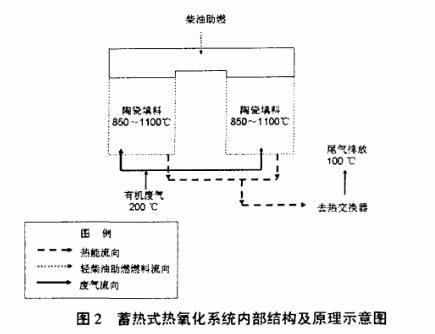
1.3.2 Main Process Parameters
(1) Air handling capacity: 20,000 m³/h;
(2) Combustion chamber temperature: 850–1100°C;
(3) Maximum solvent load in the combustion chamber: 300 kg/h;
(4) Heat release rate: 5,688,144 kJ/h;
(5) Combustion supporter: diesel fuel (higher heating value of 43,054 kJ/m³);
(6) TVOC removal efficiency: greater than 99%;
(7) Chimney exhaust gas temperature: 100–150°C.
Tel:
E-mail:
Address:
6th Floor, Building B, Singapore Pedestrian Street, No. 25 Jiaocheng North Road, Jiaocheng District, Ningde City, Fujian Province


Message
Powered by :www.300.cn SEO
Statement
Privacy Statement
This privacy policy discloses the privacy practices for Fujian Jungie New Materials Technology Co., Ltd. Tools. This privacy policy applies solely to information collected by this web site. It will notify you of the following:
What personally identifiable information is collected from you through the web site, how it is used and with whom it may be shared.
What choices are available to you regarding the use of your data.
The security procedures in place to protect the misuse of your information.
How you can correct any inaccuracies in the information.
Information Collection, Use, and Sharing
We are the sole owners of the information collected on this site. We only have access to/collect information that you voluntarily give us via email or other direct contact from you. We will not sell or rent this information to anyone.
We will use your information to respond to you, regarding the reason you contacted us. We will not share your information with any third party outside of our organization, other than as necessary to fulfill your request, e.g. to ship an order.
Unless you ask us not to, we may contact you via email in the future to tell you about specials, new products or services, or changes to this privacy policy.
Your Access to and Control Over Information
You may opt out of any future contacts from us at any time. You can do the following at any time by contacting us via the email address or phone number given on our website:
See what data we have about you, if any.
Change/correct any data we have about you.
Have us delete any data we have about you.
Express any concern you have about our use of your data.
Security
We take precautions to protect your information. When you submit sensitive information via the website, your information is protected both online and offline.
Wherever we collect sensitive information (such as credit card data), that information is encrypted and transmitted to us in a secure way. You can verify this by looking for a closed lock icon at the bottom of your web browser, or looking for “https” at the beginning of the address of the web page.
While we use encryption to protect sensitive information transmitted online, we also protect your information offline. Only employees who need the information to perform a specific job (for example, billing or customer service) are granted access to personally identifiable information. The computers/servers in which we store personally identifiable information are kept in a secure environment.
Updates
Our Privacy Policy may change from time to time and all updates will be posted on this page.
If you feel that we are not abiding by this privacy policy, you should contact us immediately via e-mail info@jungie-group.cn